Autonomous AI Agents
Autonomous agents are advanced AI systems that reason, plan, and execute multi-step tasks to meet a goal, with built-in privacy and policy controls for secure usage.
What Are AI Agents?
Autonomous and proactive agents are the new digital workforce—working for and with us. Artificial intelligence is transitioning from simple automation to autonomous systems that manage end-to-end workflows within defined security and governance boundaries. These agents not only automate repetitive tasks but also help individuals and organizations operate more efficiently by taking on multi-step work while keeping humans in control of the outcomes.
Traditional apps built with generative AI models follow a basic “request-and-respond” pattern. Autonomous agents instead are goal-directed systems that coordinate one or more multimodal AI models with external tools to plan and execute multi-step tasks. In practice, agents may combine large language models (LLMs) with retrieval augmented generation (RAG) over vector databases, call APIs and internal services, and run logic in general purpose languages like Python or within agent frameworks to carry out end-to-end workflows.
These agents rely on secure infrastructure layers—sandboxes, identity controls, and policy engines—to manage tool access and protect sensitive data, running within clearly defined permissions and workflows so their actions remain transparent and reviewable by humans.
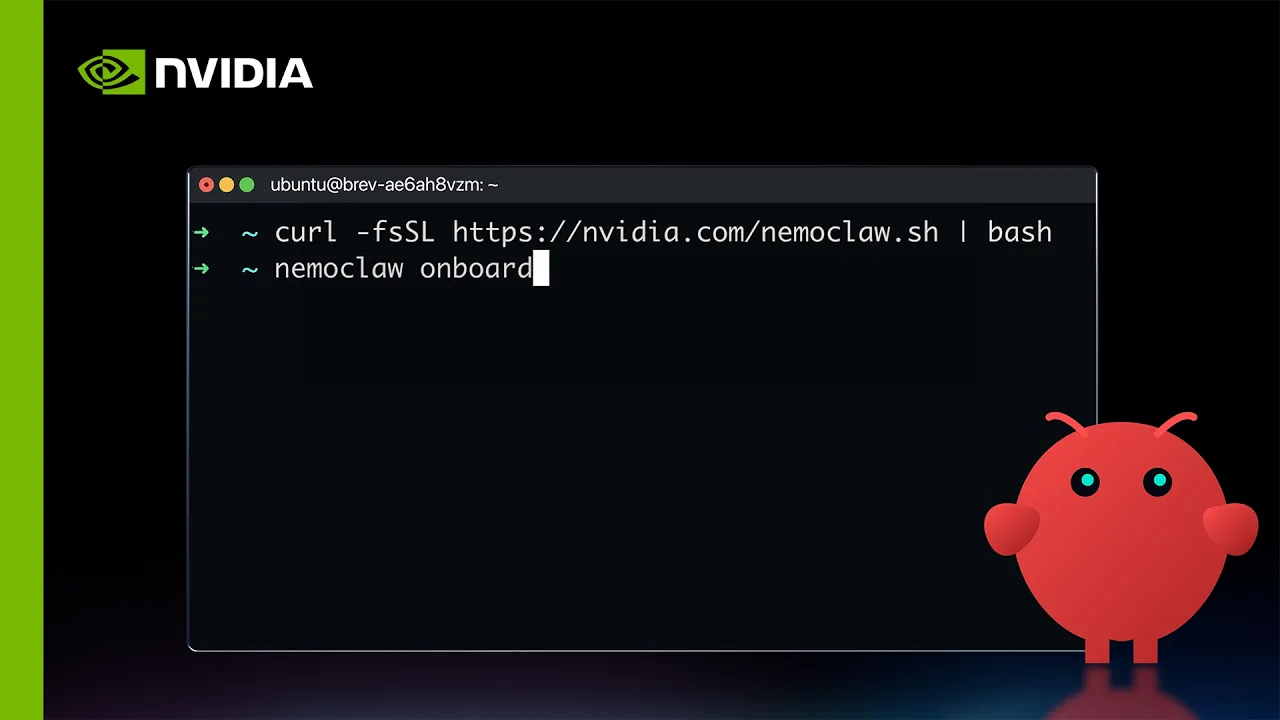
Caption: Examples of autonomous, long-running agents
For example, an autonomous agent tasked with building a website could autonomously manage tasks like designing layout, writing HTML and CSS code, connecting backend processes, generating content, and debugging.
Long-Running vs. Self-Evolving Agents
Long‑running and self‑evolving agents are simply different ways of implementing autonomous AI agents, shaping how they operate over time and improving with real‑world use.
Long‑running agents are always‑on AI coworkers that keep context across sessions and autonomously execute complex, multi‑step workflows using tools, APIs, and enterprise data—like an AIOps copilot monitoring systems and triggering fixes around the clock.
Self‑evolving agents go further by continuously improving their own prompts, tools, memory, and workflows based on interaction data and feedback, so capabilities advance over time while safety and performance remain under control—much like a research assistant that steadily sharpens how it searches, synthesizes, and reports insights.
What Are the Components of an AI Agent?
The components of an autonomous long-running agent work effectively in tandem to enable agents to reason, plan, and execute tasks securely.
- LLM: The “brain” of the agent, an LLM coordinates decision-making. It reasons through tasks, plans actions, selects appropriate tools, and manages access to necessary data to achieve objectives. The agent core is where the agent’s overall goals and objectives are defined and orchestrated. In enterprise settings, this core works within guardrails and policy constraints so the agent’s actions align with business and security requirements.
- Harness: An agent harness is the scaffolding that gives the LLM the ability to act or do work. It connects long- and short-term memory, knows which tools are available to use, and can even create new skills, if allowed.
- Secure Runtime: A secure runtime is a dedicated, policy-enforced environment where an agent executes its logic, runs generated code, and interacts with external tools. Every agent has its own sandbox to ensure that even if the agent "goes rogue" or is manipulated, it cannot compromise the underlying host system, exfiltrate sensitive data, or rack up costs.
- Memory Modules: Autonomous agents rely on memory to maintain context and adapt to ongoing or historical tasks.
- Planning Modules: Planning modules enable agents to break down complex tasks into actionable steps.
- Without Feedback: Uses structured techniques like “Chain of Thought” or “Tree of Thought” to decompose specific tasks into manageable steps.
- With Feedback: Incorporates iterative improvement methods like ReAct, Reflexion, or human-in-the-loop feedback for refined strategies and outcomes.
- Tools and Skills: AI agents can serve as tools themselves, but they also extend their capabilities by integrating with external systems such as APIs, databases, and RAG pipelines.
- Skills: Each software tool, library, or even a sub-agent or specialized agent can have associated skills. These skills provide instructions for completing tasks using the tools.
- APIs: Access real-time data or execute actions programmatically.
- Databases and RAG pipelines: Retrieve relevant, new information from accurate knowledge bases.
- Systems of Models: Open source models, like NVIDIA Nemotron™ and world foundation models such as NVIDIA Cosmos™, help developers customize models for their own use cases, while frontier models offer state-of-the-art performance across a wide range of tasks. Working together, these models enable agents to deliver high accuracy, controlled cost, and better management of data security and privacy.

Quick Links
How Do AI Agents Work?
Autonomous AI agents combine their core components to tackle complex tasks while staying within security, privacy, and policy constraints defined by their environment. Below is an example showing how these components work together in response to a specific user request.
Example Prompt: Analyze our latest quarterly sales data and provide a graph.
Step 1. User or Machine Request
A user, or even another agent or system, initiates the agent’s workflow by requesting an analysis of sales data and a visual representation. The agent processes this input and decomposes it into actionable steps. As they decompose the request into actionable steps, agents also check what data and tools they are permitted to access.
Step 2. The Reasoning Model: Interpreting the Task
The Reasoning Model evaluates available data and tool requirements to understand, then plans actions that respect policies, such as which systems the agent can query or modify.
Some of the steps might include:
- Fetch: Retrieve targeted data (e.g., pulling sales figures from the database).
- Analyze: Apply logic and algorithms to extract meaningful trends.
- Visualize: Use tools to generate professional graphs to present the final insights.
- Guard and Enforce: Apply security, privacy, and governance rules at each step so the agent only performs approved actions on authorized data.
Step 3. Memory Module: Providing Context
The memory module ensures context is preserved for efficient task execution.
- Short-term memory: Tracks the context of the current workflow, such as similar tasks requested last quarter, to streamline the process.
- Long-term memory: Retains historical knowledge, like the database location or preferred analysis methods, enabling deeper contextual understanding.
Step 4. Tool Integration: Performing the Task
The agent core orchestrates external tools to complete each step.
- APIs: Retrieve raw sales data.
- Machine learning algorithms: Analyze data for trends and patterns.
- Code Interpreters: Generate the graph based on the analysis results.
Step 5. Reasoning and Reflection: Improving Outcomes
Throughout the process, the agent applies reasoning to refine its workflow and enhance accuracy. This includes:
- Evaluating the effectiveness of each action.
- Ensuring efficient use of tools and resources.
- Learning from user feedback to enhance future tasks.
For example, if the generated graph needs refinement, the agent adapts its approach to deliver better results in subsequent workflows.
Why Guardrails Matter for Autonomous Agents
The more capable agents become, the harder they are to trust. Because autonomous AI agents run for long periods and have access to both online and local data, they require strong safety and privacy guardrails. These include sandboxing, policy engines, and privacy routers for network and data access management, as well as policy enforcement at the infrastructure layer—not just inside the agent code. Together, these guardrails help organizations safely build and deploy autonomous agents in production.
Quick Links
What Are Different Kinds of AI Agent Frameworks or Harnesses?
Autonomous agents can be written directly in Python, especially for simple workflows and experimentation. Agent frameworks or harnesses are most helpful for complex workflows or production environments, since telemetry, logging, and evaluation become important to meet objectives.
Agent frameworks or harnesses are specialized development platforms or libraries that simplify how developers build, deploy, and manage autonomous long-running agents. These frameworks abstract the underlying complexity of creating agentic systems. Developers can then focus on refining specific apps and agent behaviors rather than the technical details of implementation.
When choosing an agent framework or harness, consider factors such as:
- Multi-Agent Collaboration: Does the project require multiple agents working together?
- Project Complexity: Is the framework suitable for simple tasks or complex workflows?
- Data Handling: Does the framework support necessary data integration and retrieval?
- Customization Needs: How much flexibility is needed for tailoring the agent’s behavior?
- LLM Emphasis: Does the framework prioritize working with LLMs?
Depending on requirements, a range of frameworks exist for varied use cases and complexity levels.
There are many ways to implement AI agents—for example, bring your own Python, Hermes Agents, LangChain, and Llama Stack. These frameworks and harnesses support a wide range of models—from open models, like NVIDIA Nemotron, to frontier models—so teams can choose the right balance of capability, control, and cost for each use case.
Caption: How to build an always-on local AI agent with OpenClaw and NVIDIA® NemoClaw™
Quick Links
What Are Specialized Agents?
A specialized agent, or sub-agent, is a domain-specific AI agent designed to execute a focused, well-defined task—such as chip verification, supply chain optimization, or private deep research—within a larger multi-agent system. Unlike a general-purpose "super agent" (such as Claude Code or Codex, which orchestrates work at a high level), a specialized agent is purpose-built and optimized for a specific function, leveraging targeted skills, tools, and fine-tuned models to achieve the fastest and highest-quality completion of that task.
Fine-tuning open models, like NVIDIA Nemotron, is one way to give an agent specialized knowledge and capabilities. NVIDIA NeMo™ is a collection of tools to build production-grade, specialized agentic systems tailored to your domain needs and data. It includes tools for data processing, data generation, model fine-tuning and evaluation, reinforcement learning, speech, safety, and agent observability.
What Are the Types of AI Agents?
AI agents can be classified based on their complexity, decision-making processes, and adaptability to their environment. Below are the key types of AI agents, ranging from simple systems to highly intelligent and adaptive frameworks:
| Type of Agent | Key Characteristics | Use Case Example |
|---|---|---|
| Simple Reflex | Acts based on current perceptions and predefined rules No memory or adaptability |
Thermostat self-adjusting temperature based on sensor input |
| Model-Based Reflex | Maintains short-term memory or a model of the environment, actions guided by rules | Navigation system updating routes based on traffic conditions |
| Goal-Based | Chooses actions to reach a defined goal, using a simple model of how its actions affect outcomes. | Delivery robot optimizing its route to a destination |
| Hierarchical | Multi-tiered system with higher-level agents managing specialized agents | Factory automation system operating with supervisors and specialized bots |
| Learning | Learns and adapts through feedback and experience Leverages learning components |
AI recommendation system improving suggestions over time |
| Multi-Agent Systems (MAS) | Collaborates with other agents to achieve common goals Works in coordinated systems |
Fleet of drones coordinating to deliver packages |
| Utility-Based | Optimizes outcomes by maximizing utility or rewards for each action | Dynamic pricing algorithms adjusting rates based on market conditions |
Quick Links
What Are AI Agent Use Cases?
The potential use cases of AI agents could be basically infinite. They span from simpler use cases like generating and distributing content to end-to-end workflows like orchestrating enterprise software and database functionality.
Next Steps